
About
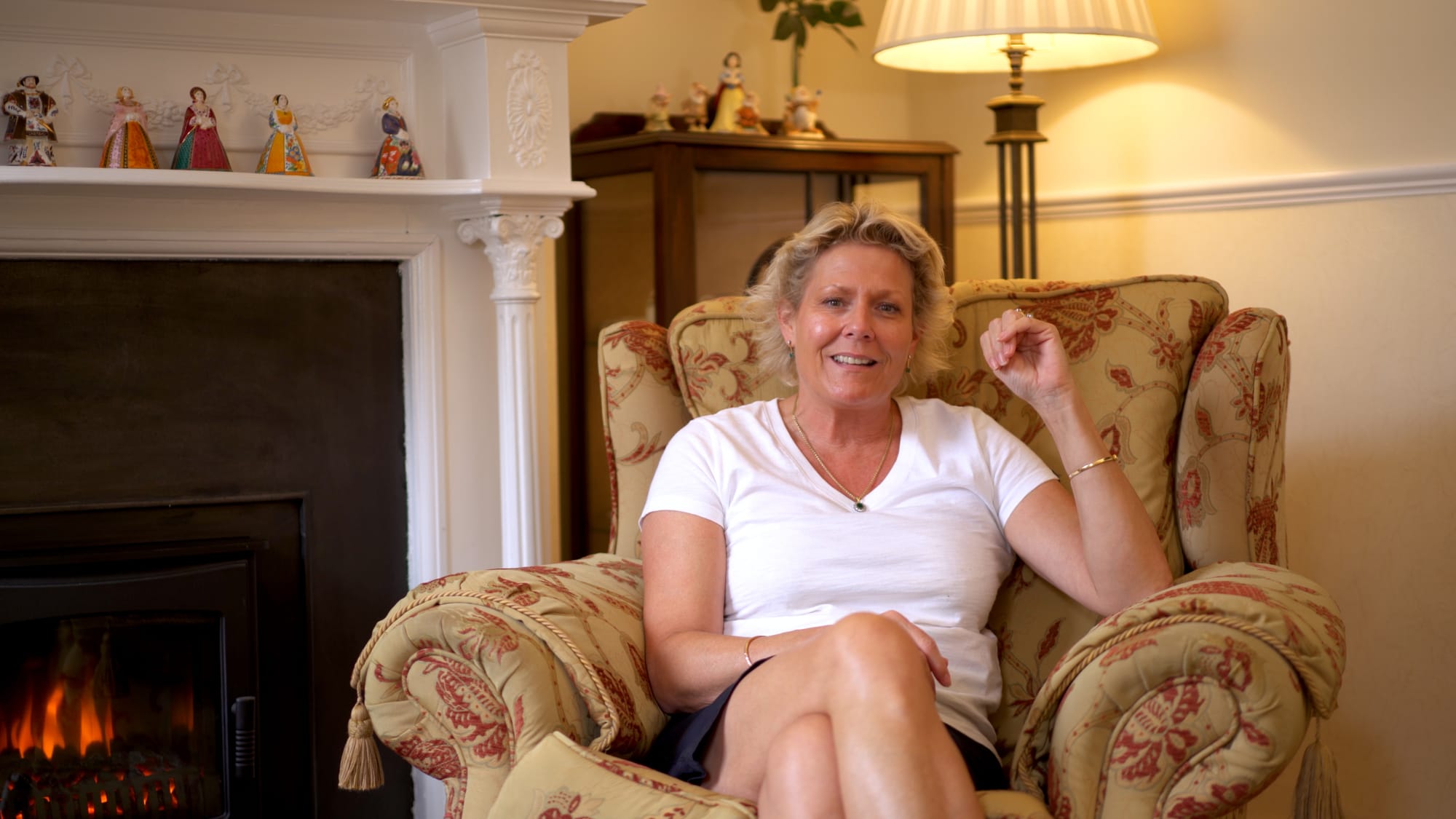
Welcome. I am so glad you found your way here. This page will tell you a little about who I am, what this publication is for, and why I believe that understanding gender diversity matters for every single one of us.
About Me
My name is Dr Helen Webberley and I am a Gender Specialist and Medical Educator. For over a decade I worked as a clinician, providing gender-affirming care to trans and gender-diverse people of all ages at a time when very few doctors were willing or able to do so. That work changed me profoundly, and it shapes everything I now do.
What I witnessed in my clinical years was, at times, nothing short of a travesty. People who simply needed compassionate, evidence-based care were turned away, left waiting, or told that their experience of themselves was wrong. Families who were trying their best to support their children were given fear instead of facts. I saw what happens when healthcare fails people, and I made a commitment that I would spend my professional life trying to change it.
My mission is simple, even if the work is not. I want every trans and gender-diverse person to be understood, accepted, welcomed, and fully included in the society they are part of. I believe, with everything I have, in inclusion and equality. Not as aspirational ideals, but as the practical, daily reality that every human being deserves.
Bias, discrimination, and prejudice are not born from malice in most cases. They are born from fear, and from a lack of knowledge. The antidote to fear is understanding, and the antidote to ignorance is education. That is why visibility matters so much. When people can see trans lives lived openly and honestly, when they can hear trans voices and read trans stories, the fear begins to dissolve. The knowledge grows. The acceptance follows.
The difficult truth, though, is that visibility requires safety. People cannot be visible, cannot be open, cannot share their stories, unless they feel accepted enough to do so. Acceptance must come first. Creating that acceptance is the heart of my work, and it is why this publication exists.
I am a doctor, a medical educator, a writer, a mother, a wife, and a grandmother. I carry with me every day the memory of the patients who trusted me with their care, and I do this work for them, and for every trans person who is still waiting to be believed.
About This Publication
Dr Webberley Responds is my home on the web, published through helenwebberley.com. It is where I respond to the news, the policies, the research, and the public debates that affect trans and gender-diverse people and their families.
There is a great deal of noise in this space at the moment. Political decisions are being made quickly, guidance is being rewritten, and the voices of trans people and their clinicians are too often absent from the conversations that affect them most. I set up this publication to change that, in whatever way I can.
What you will find here is a range of content across several sections.
- In Challenging Misinformation I respond to the inaccurate, misleading, and sometimes harmful claims that circulate in the press and on social media.
- In Showcasing Gender Diversity I share stories, experiences, and perspectives that celebrate the full range of gender identity and expression.
- In Education you will find formal resources, guidelines, and explainers.
- In the Hall of Fame I celebrate those who have stood up for trans rights with courage and integrity.
- In the Hall of Shame I hold to account those whose conduct has caused harm, with evidence and sourced documentation.
Free members can read all public content and comment on articles. Paid members get access to my private Telegram group, early content, and the full education library. Your support, at whatever level, makes this work possible and I am deeply grateful for it.
About Gender Diversity
If you are new to this topic, welcome. You do not need any prior knowledge to be here, and there are no silly questions.
Gender diversity is simply the reality that human beings experience gender in a wide variety of ways, and that this variety has always existed across cultures and throughout history.
Gender identity is a person's internal, deeply held sense of their own gender. It is not the same as biological sex, which refers to physical characteristics. For most people, their gender identity aligns with the sex they were assigned at birth. These people are described as cisgender. For trans and non-binary people, it does not.
A transgender person is someone whose gender identity differs from the sex they were assigned at birth. A transgender woman is a woman who was assigned male at birth. A transgender man is a man who was assigned female at birth. Non-binary is an umbrella term for people whose gender identity does not fit neatly into the categories of man or woman. Some non-binary people identify as both, some as neither, and some as something entirely their own. All of these identities are valid, and all deserve respect.
When a trans or non-binary person takes steps to live in a way that aligns with their gender identity, this is called transition. There are four broad types of transition, and not everyone pursues all of them.
- Social transition involves changes to name, pronouns, clothing, and presentation.
- Legal transition involves updating official documents such as a passport, driving licence, or birth certificate to reflect a person's true gender.
- Medical transition may involve hormone therapy to align the body more closely with a person's gender identity.
- Surgical transition involves procedures that change physical characteristics of the body.
Each of these is a personal decision, and no one type of transition is more valid or more necessary than another.
Trans and non-binary people have the same human rights as everyone else. This includes the right to dignity, the right to privacy, the right to healthcare, and the right to live free from discrimination and violence. In many countries these rights are enshrined in law, including through the Equality Act in the UK, which protects gender reassignment as a protected characteristic. International frameworks, including the Yogyakarta Principles, set out clearly how human rights law applies to gender identity and expression.
Trans people are some of the most resilient, creative, and courageous people I have ever had the privilege of knowing. They deserve healthcare that respects who they are, communities that welcome them, and a society that recognises their full humanity. That is what I am working towards, and I hope you will join me.
Dr Helen Webberley | Gender Specialist and Medical Educator
www.helenwebberley.com